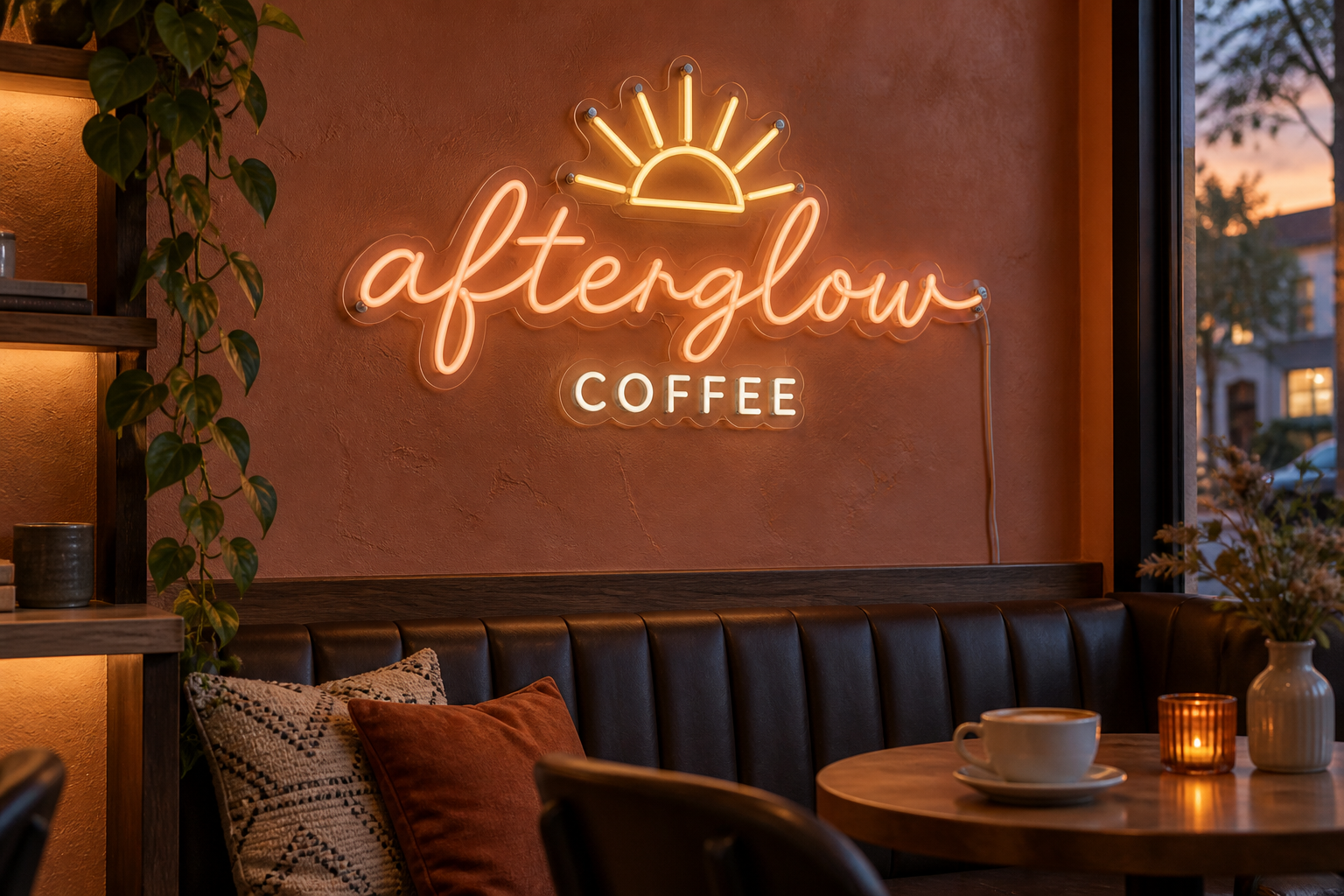
What to Include in a Custom Neon Sign Quote Request
A useful custom neon quote request includes the exact wording or logo, proposed dimensions, intended location and photographs of the mounting area. Add the information needed to understand power access and installation, then ask for the final construction and included equipment to be confirmed in writing. A picture of the desired style alone leaves too many decisions open.
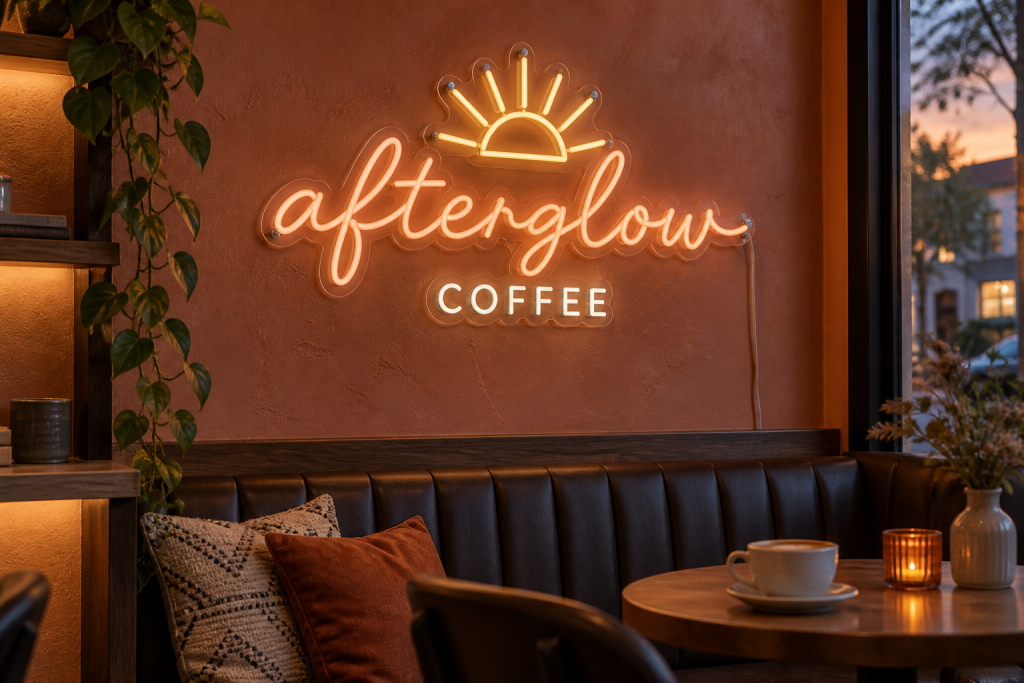
Get Quick Signs handles custom neon through an individual quote and mockup process. The brief should describe your own project rather than assume that an old prebuilt design, a listed example or another customer’s installation is available with the same specifications.
Send the exact design and identify what can change
Provide the best original logo file you have and type the wording in the message as well. Include punctuation, capitalization and any accent marks. A typed reference makes a stylized word easier to check and reduces the chance that a decorative letter is misread.
If you have only a photograph or screenshot, say so. Explain which elements matter most: the lettering style, icon, color relationship or overall silhouette. Mark any tiny detail that could be simplified, and identify brand elements that should remain unchanged. Let the design review resolve what can be represented clearly at the intended size.
Separate inspiration from instructions. “I like the warm color and rounded lettering” is more useful than sending several unrelated images with no explanation. Keep any reference showing a specific backing shape distinct from a reference showing a preferred glow color.
Describe the sign and the available space
Measure the wall or display area, then state a preferred overall sign size. Ask whether the quoted dimensions refer to the illuminated artwork, the outer backing or the complete assembly. That distinction matters when the sign must fit between shelves, inside a backdrop or above a counter.
Take a straight-on photograph and include a measured reference in the scene. Also photograph nearby furniture, obstructions and the intended power location. The pictures help communicate the project; they do not replace accurate measurements or an installer’s assessment.
For example, you might request comparison mockups at 36 × 18 inches and 48 × 24 inches. Both have a 2:1 aspect ratio, so they preserve the same overall proportions. The larger bounding rectangle is 1152 square inches versus 648, approximately 78% more area. That is a scale comparison, not a pricing formula: custom construction does not necessarily cost in direct proportion to rectangle area.
Explain the environment and mounting context
Say whether the sign will be indoors, behind glass, under a covered outdoor structure or directly exposed to weather. Describe the setting instead of simply writing “outdoor,” since those situations can require different decisions. Ask for the construction appropriate to that actual location to be identified in the quote.
State whether the sign will hang on a wall, attach to a freestanding backdrop or move between events. Identify the supporting surface if known, and note whether you have an installer. Do not assume that an illustrated mounting arrangement includes all the hardware or anchors suitable for your wall.
Describe power access without attempting to design the electrical installation yourself. A photograph and a measured route from the planned sign position to the intended supply point help reveal questions about cord routing and equipment placement. Any required electrical work should be handled through the appropriate installer.
Use a brief that makes unanswered questions visible
You can organize the request under these headings:
- Design: exact wording, logo file and preferred visual treatment.
- Size: preferred overall dimensions and one alternative, if useful.
- Location: environment, mounting surface and labeled photographs.
- Use: permanent display or repeated event setup.
- Equipment: ask what backing, mounting parts, power equipment and controls are included.
- Schedule: needed-in-hand date, destination and whether the deadline is flexible.
- Approval: the person who will confirm the mockup and final specification.
Keep the event date separate from the delivery deadline. Ask for production and transit to be confirmed for the specific order; do not plan around a generic turnaround claim or assume expedited service is included.
Before approving, compare the quote with the brief. Check dimensions, wording, backing shape, intended environment, equipment, installation responsibilities and any warranty terms supplied for that project. Resolve differences while they are still questions rather than treating a visual mockup as a complete technical specification.
Send the artwork and completed brief through the project contact form. A clear starting packet lets the next conversation focus on the design and practical choices that actually affect your sign.