Which Sign Material for Which Environment? Indoor, 1 Year, 5 Year and 8 Year Outdoors
Choose the sign material by how long the sign has to survive, not by what it is made of. Indoors, almost anything works and foamcore is the cheapest sensible option. For roughly one year outdoors, coroplast or polystyrene is correct. For three to five years, move to expanded PVC or 0.040 inch aluminum with a calendered film, because 3M rates its IJ35C intermediate film at up to five years. For eight years and beyond you need aluminum or ACM carrying a cast film, since General Formulations rates GF 830 cast at up to eight years and 3M rates the IJ180 cast series at ten. In almost every outdoor failure, the graphic dies before the panel does.
Key takeaways
- The panel and the graphic have separate lifespans. Your sign lasts as long as the shorter of the two.
- Foamcore is indoor only. Water reaches the core through any cut edge and the facers delaminate.
- Coroplast is a season to a year material. It is chosen for cost and stake compatibility, not longevity.
- Calendered intermediate film is rated to about five years. Cast film is rated to eight to ten.
- Aluminum and ACM outlive every film you can put on them, which is why they are the substrate of choice for long term signage.
- Cost per square foot runs from 2.06 dollars for 4mm coroplast to 8.20 dollars for 0.040 inch aluminum, before any film.
Which sign material lasts how long outdoors?
| Target life | Substrate | Graphic | Substrate cost per sq ft | Typical use |
|---|---|---|---|---|
| Indoor, any duration | Foamcore | Direct print | 3.28 dollars | Presentations, easels, events |
| Indoor, high traffic | PVC 3mm | Direct print | 3.05 dollars | Wall signage, wayfinding |
| Weeks to months outdoors | Poster or HDPE | Direct print | 3.00 dollars per sq ft | Short campaigns, windows |
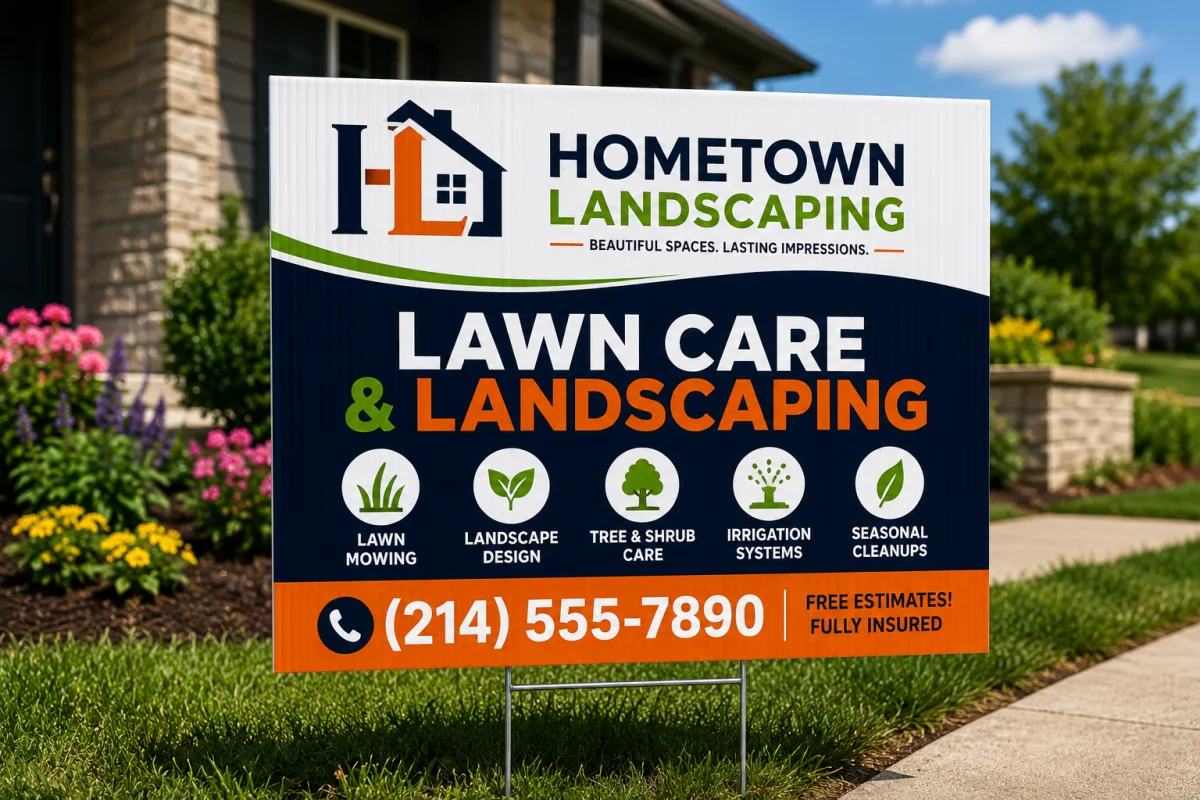
| Up to about 1 year | Coroplast 4mm | Direct print | 2.06 dollars | Yard, real estate, directional |
| 1 to 3 years | Polystyrene or PolyAir | Direct print | 2.58 to 2.34 dollars | Sheltered outdoor, temporary sites |
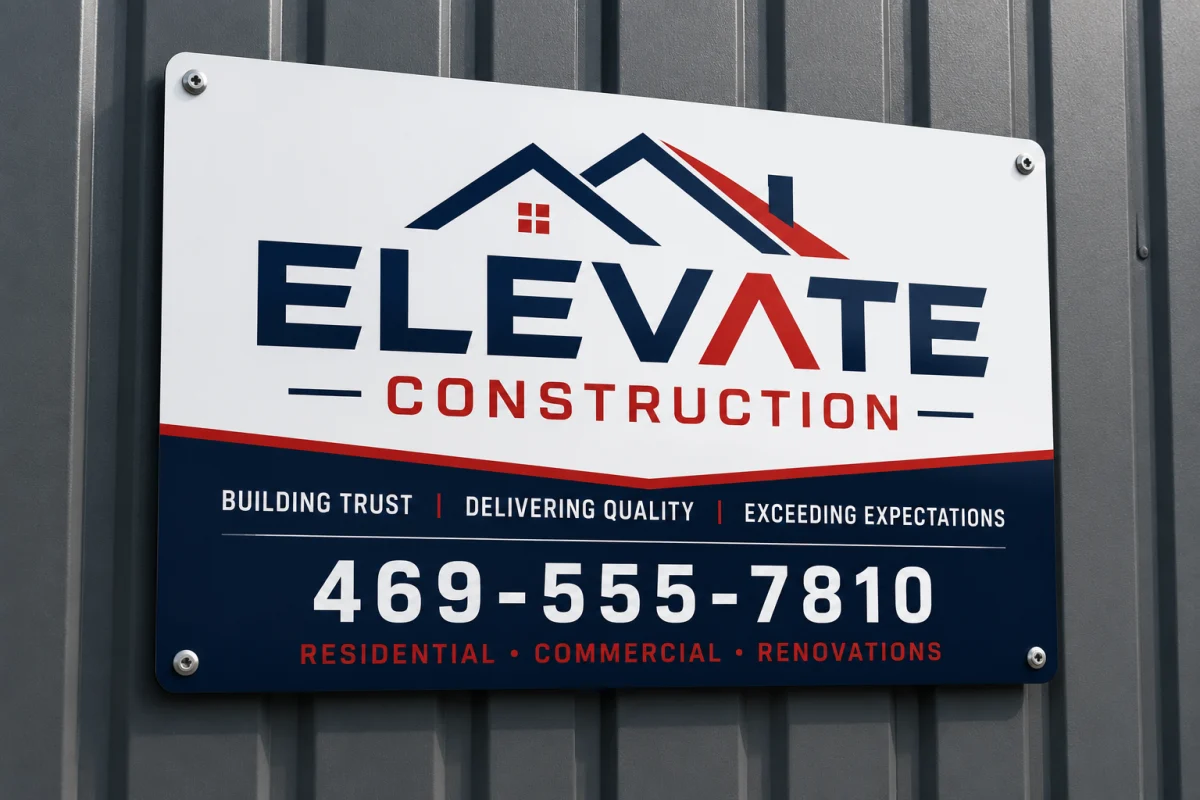
| 3 to 5 years | PVC 3mm or aluminum 0.040 | Calendered film | 3.05 to 8.20 dollars | Business panels, parking, property |
| 5 to 8 years | Aluminum 0.040 or ACM 3mm | Cast film | 8.20 or 7.50 dollars | Permanent identification signage |
| 8 years plus | ACM 3mm or aluminum 0.080 | Cast film, laminated | 7.50 or 14.06 dollars | Monument faces, large permanent panels |
Why does the film matter more than the panel?
Because aluminum does not degrade in sunlight and vinyl does. The manufacturer ratings are explicit about it. General Formulations rates GF 830 AutoMark, a 2.0 mil cast film, at up to eight years of outdoor durability. 3M rates its IJ180 cast series at ten years of expected outdoor performance, while noting that the warranty period can be shorter than the performance life depending on construction and application conditions. Meanwhile the 3M product bulletin for IJ35 and IJ35C covers an intermediate calendered film that suppliers commonly quote at up to five years on flat surfaces.
So a 0.040 inch aluminum panel with an intermediate film on it is a five year sign, not a fifteen year sign, no matter how good the metal is. If you want the panel life you have to pay for the film life. The film difference on our roll pricing is 4.49 dollars per square foot for 3M IJ-35C against 5.99 for GF830 cast and 7.49 for 3M IJ180.
What actually kills each material?
- Foamcore. Moisture. The facers separate from the core and the panel warps permanently.
- Coroplast. UV embrittlement. The polypropylene chalks and the flute walls crack, usually before the ink fades noticeably.
- Polystyrene. Impact and heat. It goes brittle in cold and softens in direct summer sun on a dark face.
- PVC. Thermal movement. Expanded PVC expands and contracts more than most substrates, so long panels need slotted fixings.
- Aluminum. Nothing much, structurally. The paint or the graphic surface fails first.
- ACM. Edge damage and delamination if the panel is repeatedly flexed. 3A Composites markets Dibond specifically on flatness and outdoor durability, and in practice it is the longest lived panel we sell.
What does each material cost per year of service?
Dividing the substrate cost per square foot by a realistic service life turns a shopping list into a decision. 4mm coroplast at 2.06 dollars per square foot over one year is 2.06 dollars per square foot per year. 3mm PVC at 3.05 dollars over four years is 0.76. 0.040 inch aluminum at 8.20 dollars over six years is 1.37. 3mm ACM at 7.50 dollars over ten years is 0.75.
Read that ranking carefully, because it inverts the sticker price. The most expensive panels on the shelf are the cheapest per year in service, and the cheapest panel on the shelf is the most expensive per year by a factor of nearly three. Coroplast is still the right answer when the sign genuinely comes down in a few months, since you are buying disposability on purpose. It becomes the wrong answer the moment somebody has to go back out and replace it.
How do I pick without overspending?
Work backwards from the removal date. If you know the sign comes down in six months, paying for an eight year construction is money burned. If the sign is going on a building and nobody will ever be asked to replace it, the cheap option is the expensive one, because you will pay the install cost twice.
Three practical rules. Below one year, use coroplast and do not think about it. One to five years, PVC or 0.040 aluminum is the sweet spot on cost per year. Above five years, only ACM and aluminum with cast film are honest choices. For a deeper substrate comparison see substrate weights and rigidity compared and which rigid sign material is right for you.
Frequently asked questions
What sign material lasts the longest outdoors?
Aluminum and ACM. Neither degrades meaningfully in sunlight, so the practical limit is the film or paint on the surface, which is eight to ten years for a cast vinyl.
How long does a coroplast sign last outdoors?
A season to about a year of continuous exposure. It fails by UV embrittlement, not by the print wearing off.
Can I use foamcore outside if I laminate it?
No. Lamination does not seal the cut edges, and moisture reaches the core from the edge. Use coroplast or PVC instead.
What is the difference between a 5 year and an 8 year outdoor sign?
Almost entirely the film. Calendered intermediate vinyl is rated to about five years, cast vinyl to eight or more. The panel underneath is often identical.
Does laminating a printed sign make it last longer?
Yes, for adhesive graphics. An overlaminate takes the UV and abrasion so the printed film underneath is protected, which is why cast film warranties usually assume a matching laminate.
Match the material to the site
Compare substrates and see live pricing in the rigid signs category, or go straight to coroplast for short term, PVC for the middle and aluminum for permanent. Adhesive films are in the adhesive category.